signal processing • deep learning • transformers • TensorFlow • Flask
For my bachelor's thesis, I have developed a low-cost acoustic camera—an imaging system that visualizes sound sources by detecting their position and intensity. It captures sound waves using a microphone array, processes the signals, and converts them into an acoustic image. To achieve this, I am using a compact, off-the-shelf 16-channel microphone array, as shown below.
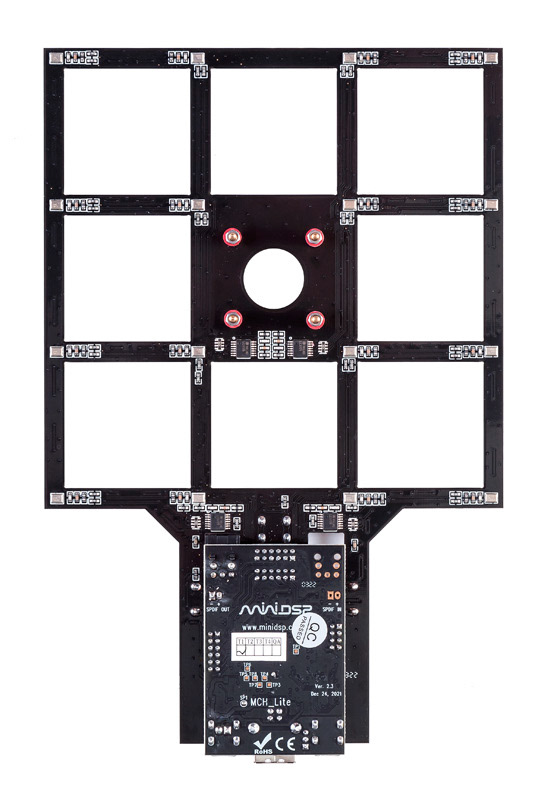
The miniDSP UMA-16 microphone array
My project aims to predict the origin of sound in real time with a transformer deep learning model trained on synthetic data. I compare the data-driven approach to beamforming, a classical algorithm in acoustics. While beamforming can deliver more precise results in most dynamic ranges, the model approach offers a decisive advantage: it is much faster!
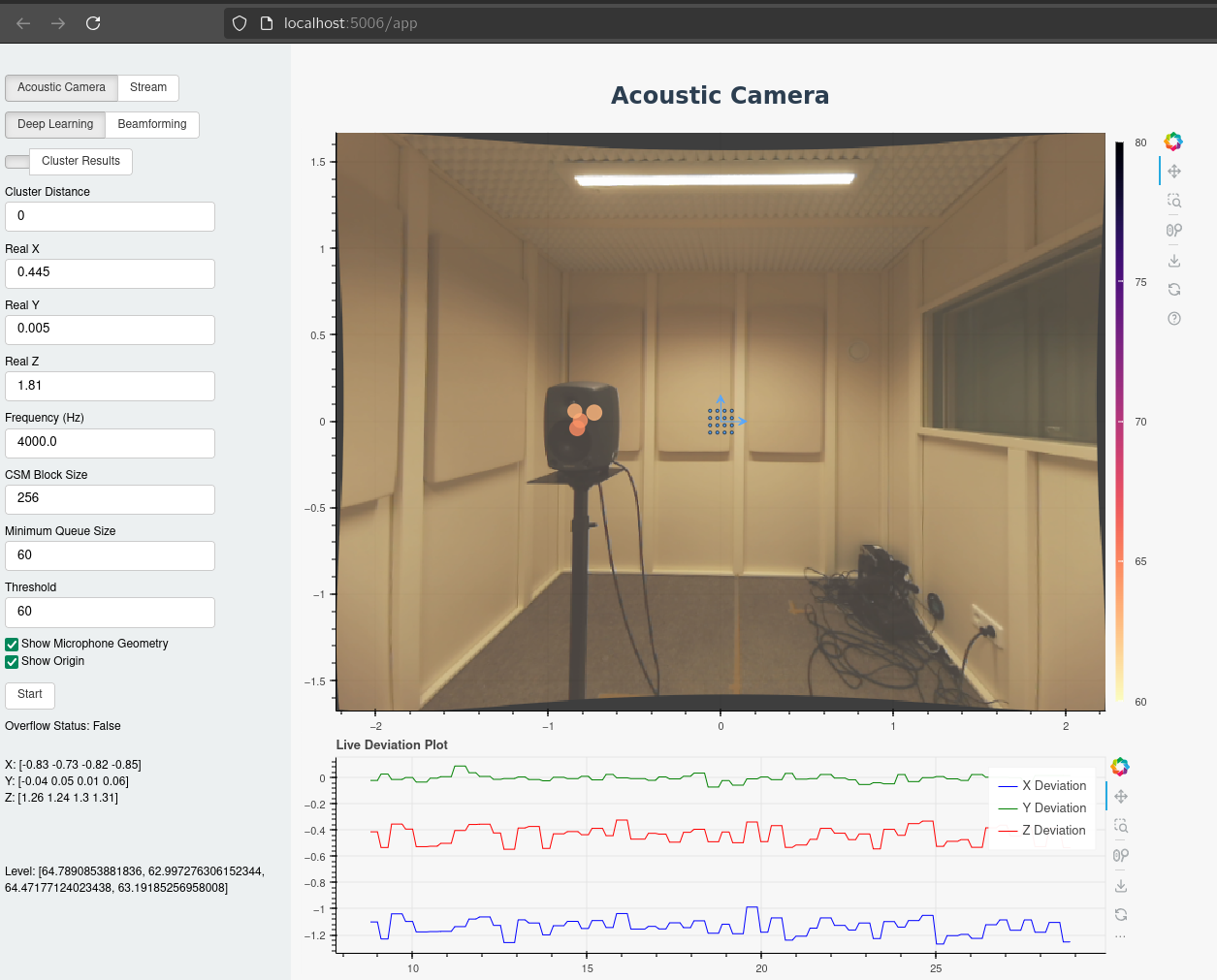
Here, you can see a screenshot of the acoustic camera interface.
You can check out GitHub if you are interested in the code!
I have conducted a series of measurements to assess the system's performance. The experiments were carried out in a regular room to capture real-world data and in an anechoic chamber to validate and compare the results with reflection-free data.
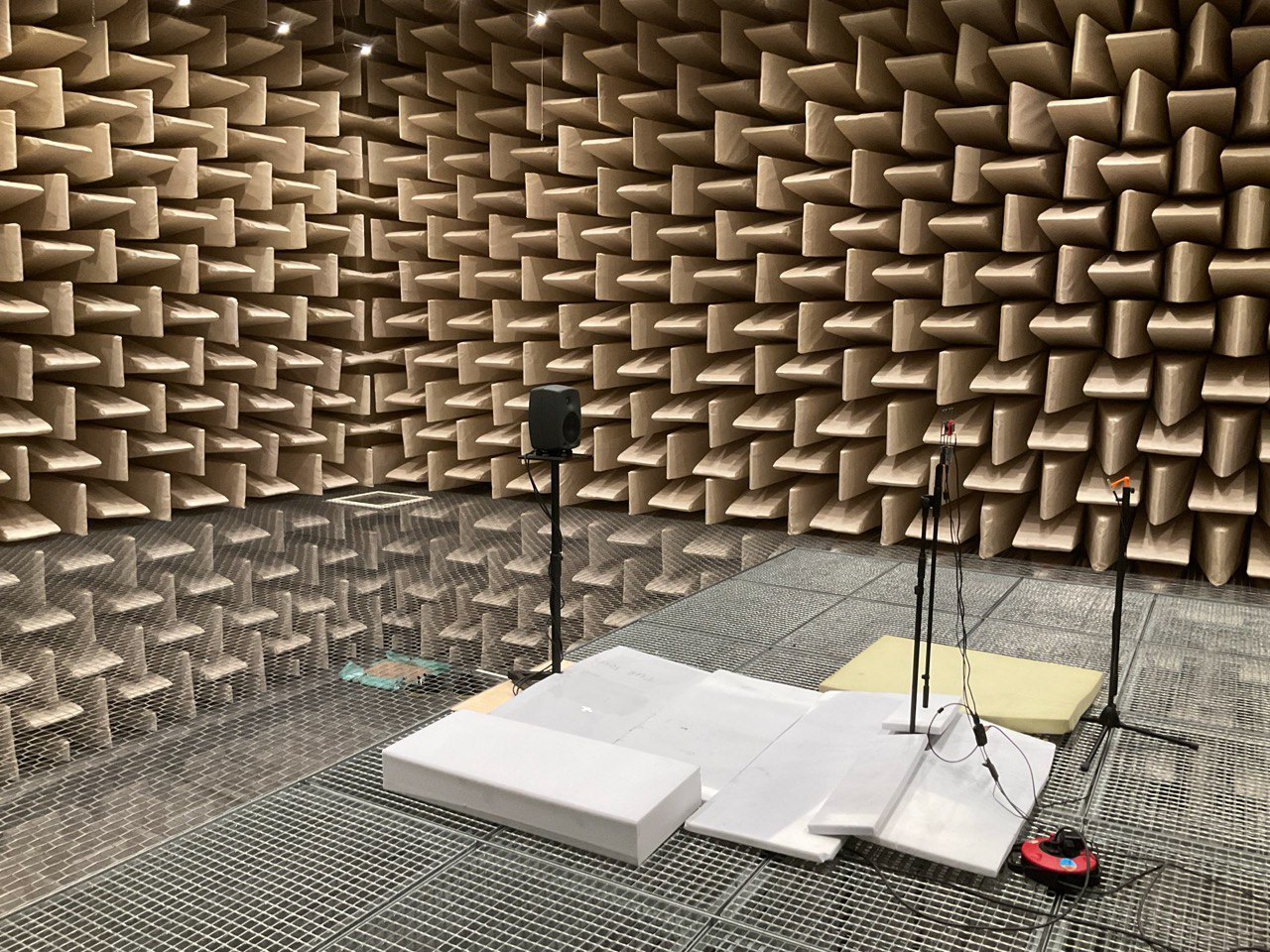
Anechoic chamber at the TU Berlin department of engineering acoustics
I had the opportunity to attend the DAS/DAGA conference in Copenhagen with the department of Technical Acoustics, where I gave an interactive talk on parts of the Python codebase related to acoustic imaging. The focus was on presenting tools for working with Acoular. Acoular is an open-source Python library developed by the department, which I also use extensively in my thesis. Here, you can find the workshop.